
COAST-SCAPES partners RMIT Australia and FNCA meet to discuss issues in Mar Menor core pilot
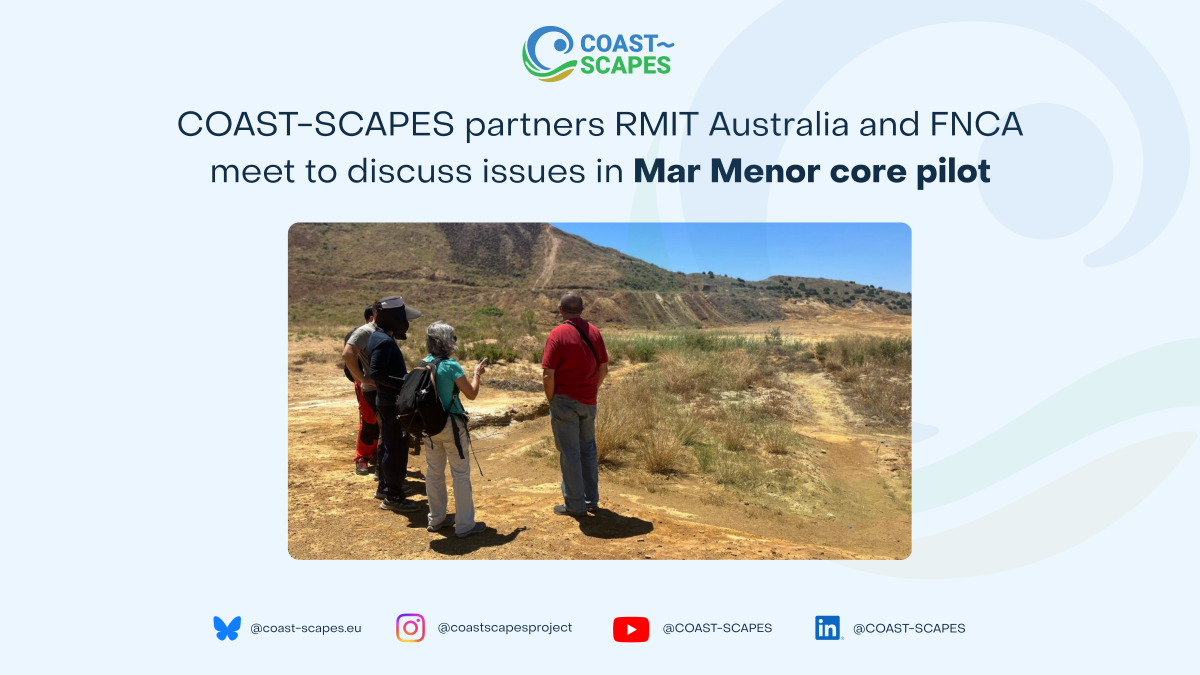
In late May, Professor Vincent Pettigrove from RMIT Australia visited Dr. Julia Martinez and Dr. Eva García Ortiz from the Fundación Nueva Cultura del Agua (FNCA) in Murcia. The visit was to understand the major issues in Mar Menor, especially pollution issues that were impacting the ecological, social and economic values of this estuary. The FNCA team hosted the visit and spent valuable time showing the RMIT Australia team around Mar Menor.
One informal meeting was held with Dr. Conchi Martinez to hear about the work being done to restore the seagrass meadows as part of the GRASSREC national project. A visit to the vibrant Lo Pagan fish market was also organised, where the team met José Peñalver, who spoke about how some metal pollution may contaminate fish tissue. Other pollution issues included replenishing sand on beaches, which can release metals into the water, aquifers recharging poor-quality water directly into the bay, permanent flows from agricultural areas and occasional treated wastewater discharges
The visit also included a trip to the historical mining areas, where a meeting with Professor Angel Faz Cano and his team from the University of Cartagena was organised. They have been conducting trials to rehabilitate these mines to reduce runoff of highly metal-contaminated sediments into Mar Menor during rainfall events. On the agenda was also a walk to La Manga, which is a narrow strip of land separating Mar Menor from the Mediterranean Sea and a highly urbanised area and popular tourist destination.
This visit shed more light into the role of nutrients being a major issue that can devastate the bay, especially following major storm events that can transport large volumes of nutrients into Mar Menor. The visit highlighted the scale of pollutants entering Mar Menor, underscoring the need for further work to build the estuary's resilience to its current stressors. RMIT Australia thanked the FNCA team for hosting the visit and for sharing their insights into the challenges of making Mar Menor a sustainable system.


